


Imagine a world where there is no hierarchy, where the landscape is your supermarket and understanding the earth is how you survive.
Over time, this archive will become a collection of remote places, living traditions and communities whose knowledge has survived the passing of generations. The San people belong firmly within it. Previous entries in the Private Atlas have taken me to remote landscapes and places shaped by isolation, but this entry explores something different: a way of seeing the world.
My first insight into how the San live came while spending time with them in the Kalahari. I listened to the San men as they shared with me, their beliefs about the land, the hunt and the traditions that continue to shape their communities. As I watched them move through the landscape, I began to understand just how differently they see the world.
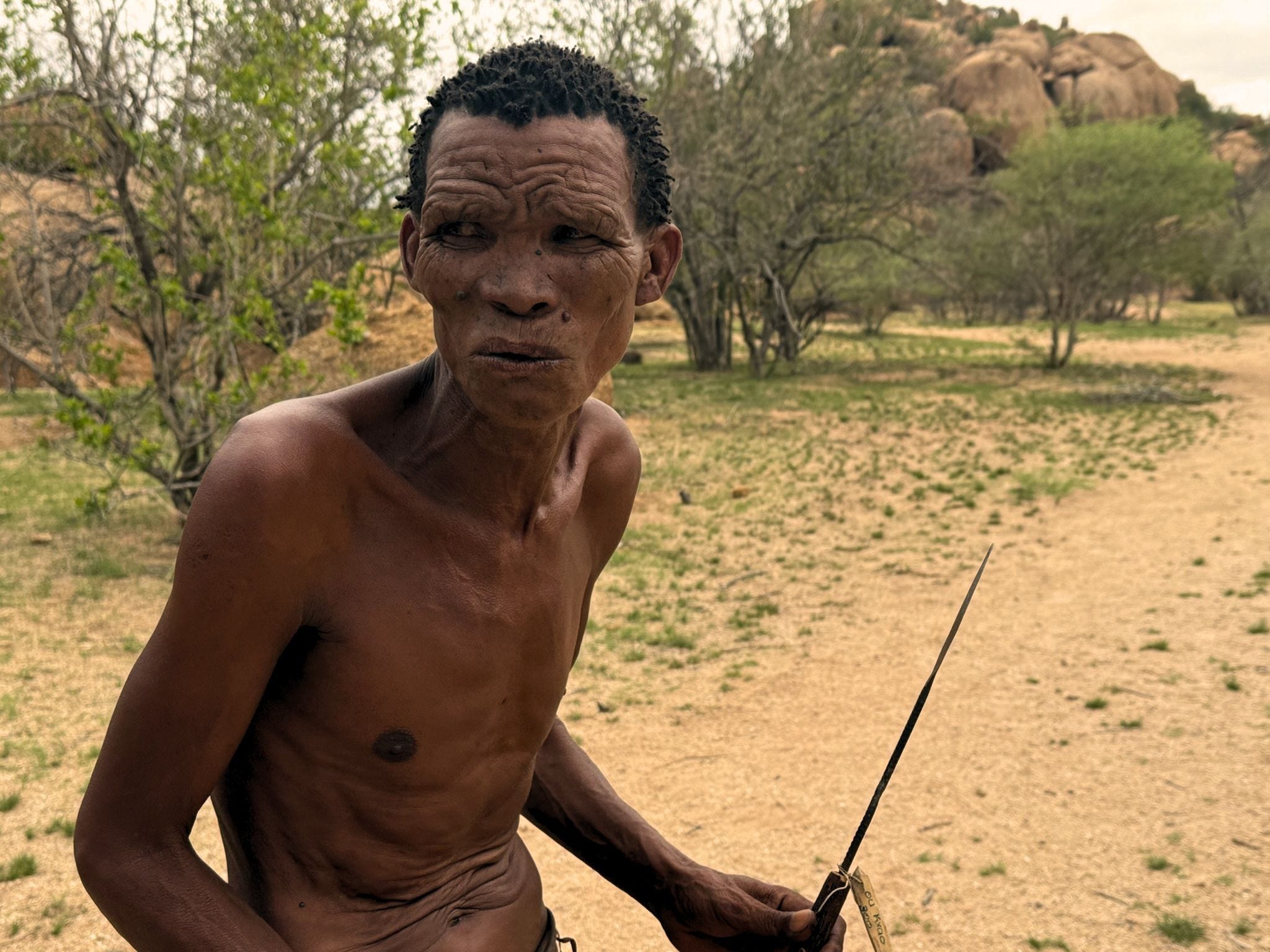
This world is real, this world, is the world of the San people, the hunter gatherers. The San communities have been living in the Kalahari region of Southern Africa for hundreds of generations and remain one of the closest living communities of a hunter gatherer culture. For the San, survival depends not on individual achievement, but on the collective knowledge and wellbeing of the group. This deep relationship between people and the natural world is something I have explored before, from the vast interconnected ecosystem of the Amazon rainforest to the communities who continue to live alongside it.
The vast desert landscape of the Kalahari is shaped by rugged burnt orange rocks and miles of dry sandy terrain. An environment defined by relentless, dry heat, it’s clear that survival here requires a true understanding of the surrounding nature: animals, plants and weather.
These are the real nomads. They move, through the Kalahari, not to find themselves or chase the sun, but for true survival. Much like the animals they share the land with, they migrate to hunt game, source water and plants. Much of the landscape remains unchanged. Roads are scarce, buildings are few and vast stretches of the Kalahari still feel incredibly remote. This has allowed them to mirror the knowledge and practices passed down from their ancestors. Something embedded in them for centuries, something modern society cannot imagine. This idea of knowledge carried through generations is something I keep returning to in the Private Atlas, whether through the skills of traditional craftspeople or communities whose ways of living are slowly disappearing.
This, I find fascinating. Imagine knowing the land so intimately that the nature that surrounds you is your map, not the internet, not technology.
Every blade of grass is an insight into the weather or can allow the tracking of a passing animals movements. Every turned stone tells a story.
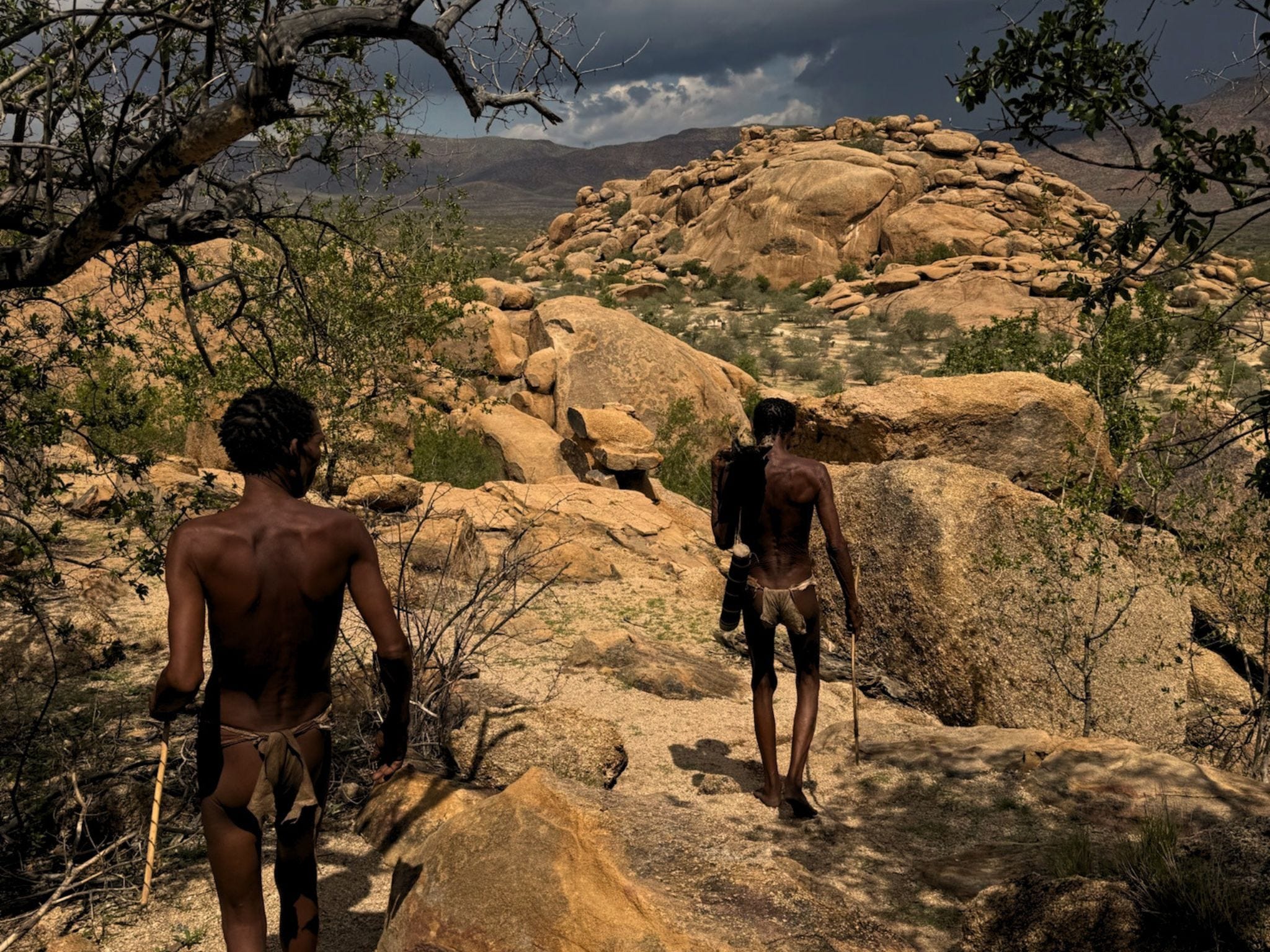
When the rain does decide to show, it releases a strong scent of damp dust, a warning that the floods may follow. It takes immense patience, time spent listening closely to the winds. The winds determine the direction, throwing a handful of sand in the air acts much like a compass. Each movement calculated and only executed when nature provides guidance. They walk not to disturb the land, not to conquer, but to pay it respect, trusting that in return, nature will guide them to where they need to be.
The Ju/’hoansi men are tasked with tracking, hunting and returning to the communities with the meat. A test of endurance, hours spent in the blistering sun, scanning the dusty ground. Almost like an art, they can determine the speed, weight, health and direction an animal has passed by a footprint.
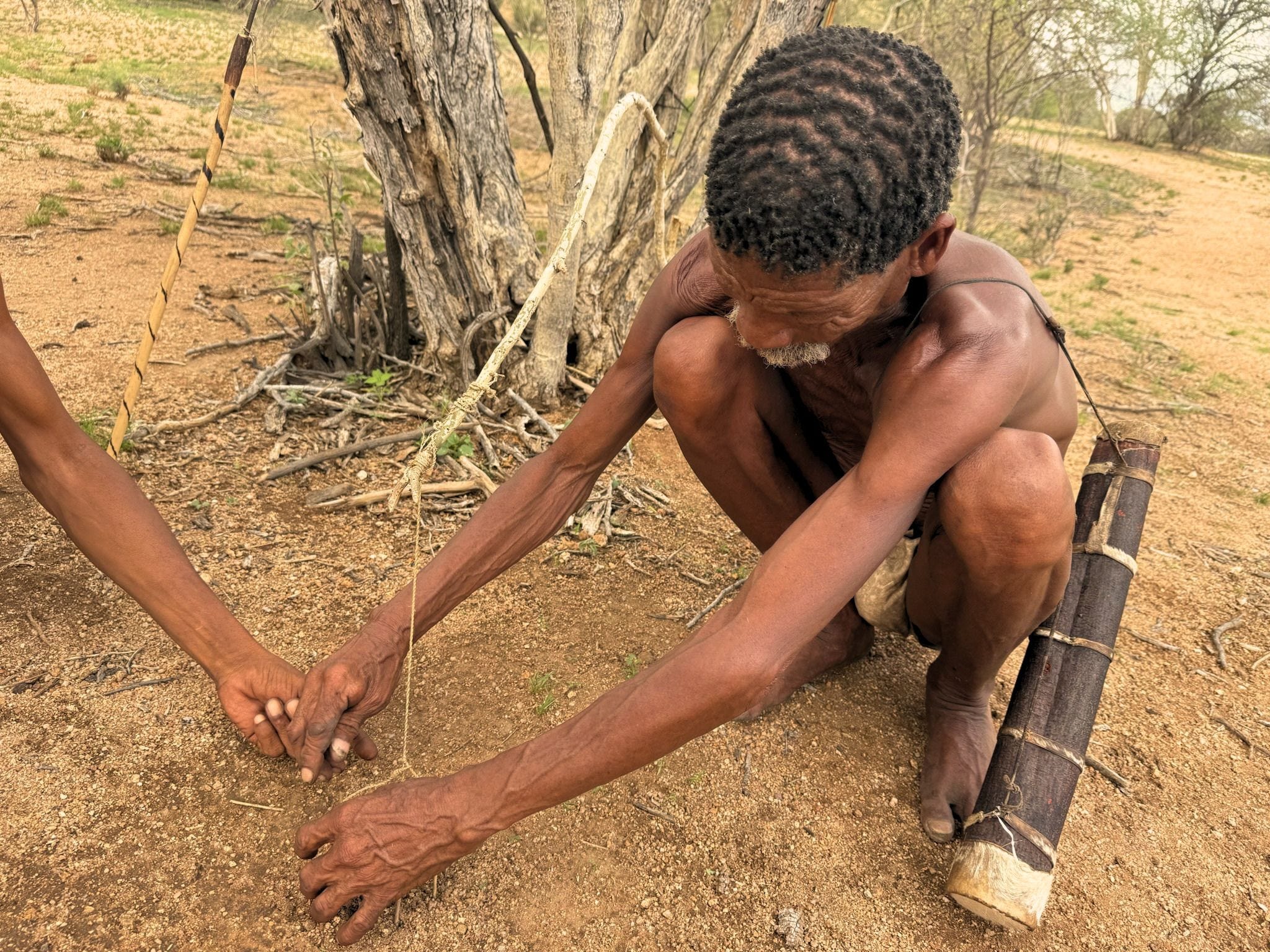
All weapons they use are crafted from the natural resource found directly around them, plant fibres, animal bones, wooden bows, and arrows tipped with a coat of poison made from the potent larva of a diamphidia beetle.
To harmonise their respect for nature, the poison used does not initiate an immediate death, instead slowly shutting down the nervous system. Their deep understanding of the landscape allows them to track large game such as kudu, eland and giraffe. In addition, they also set traps for smaller animals.
When a successful hunt is brought back to the community, they behave differently from what one might expect. Even though they are thrilled, they do not reward or praise the hunter, instead they are mocked and laughed at for the size of the meat.
I was told about a tradition known as “insulting the meat.” A cultural tradition that prevents arrogance and boasting, which is deemed as almost sinister behaviour within the community. The San believe downplaying the success, prevents arrogance and keeps them humble which safeguards the communities wellbeing. Allowing them to protect themselves and the community from internal hierarchy.
The relationship between the San and their prey is not one of dominance but through a deep respect towards nature. They don’t see the animals as enemies, they see them as partners of survival in the world. The San protect their communities and well being by rejecting hierarchy, yet we live in a world where we are rewarded for status and success. This is the thought I keep coming back to after leaving the Kalahari: how would our society be if there was no hierarchy? In a world obsessed with recognition, perhaps there is something worth learning from a culture that teaches its most successful members to remain humble.
I would love to hear your thoughts. What is one lesson from a traditional culture that has changed the way you see the modern world?
The hunt is only a small part of the San culture. Subscribe to find out more about their daily life, the plants they use, how they heal themselves through dance, how they draw spiritual maps and how modern society is impacting them.
This entry is another pin on the map.
The Private Atlas is slowly becoming a catalogue of places, traditions and communities that offer a different way of seeing the world.
→ Why I Can’t Stop Thinking About The Amazon Rainforest
→ Fair Isle: The Living Craft Tradition of the Shetland Islands
→ The Art of Day Dreaming
And, that is why I love tracking in the ancient bush so much! Great read, @intheOSI!
Love this article! Just discovered In the Osi and I’m a huge fan! Keep up the great work and looking forward to your next piece