



Hey you!
Welcome to this week’s new pin.
This one’s about silk - something born through such an intense process, creates something so calming.
Love - OSI
The more I learn about silk, the less it feels like a fabric and more like a connection between people, nature and time.
Silk & Me
I love silk. And long before I thought about the process of how any of my clothes were created, my wardrobe predominantly consisted of wools - I touch on this in ‘The Island Inside the Jumper’, leathers and silks: underwear, PJ’s, shirts.
My favourite is a shirt from a charity shop I grabbed twenty years ago, I’m yet to discover exactly what ‘type’ of silk it is.
I’ve repaired holes, reattached buttons and tried to let it go numerous times. Yet the delicate fabric not only survived my brutal wardrobe clearouts, but also being packed multiple times and moved across countries. A real testament to its durability.
Funnily, I never really questioned why I liked silk so much, i just knew I reached for it. Maybe I felt comfort from it and maybe I felt I reflected its hidden durability.
The more I learn about the way it’s created, the more I admire it.
The Process (Simplified):
The Silkworm
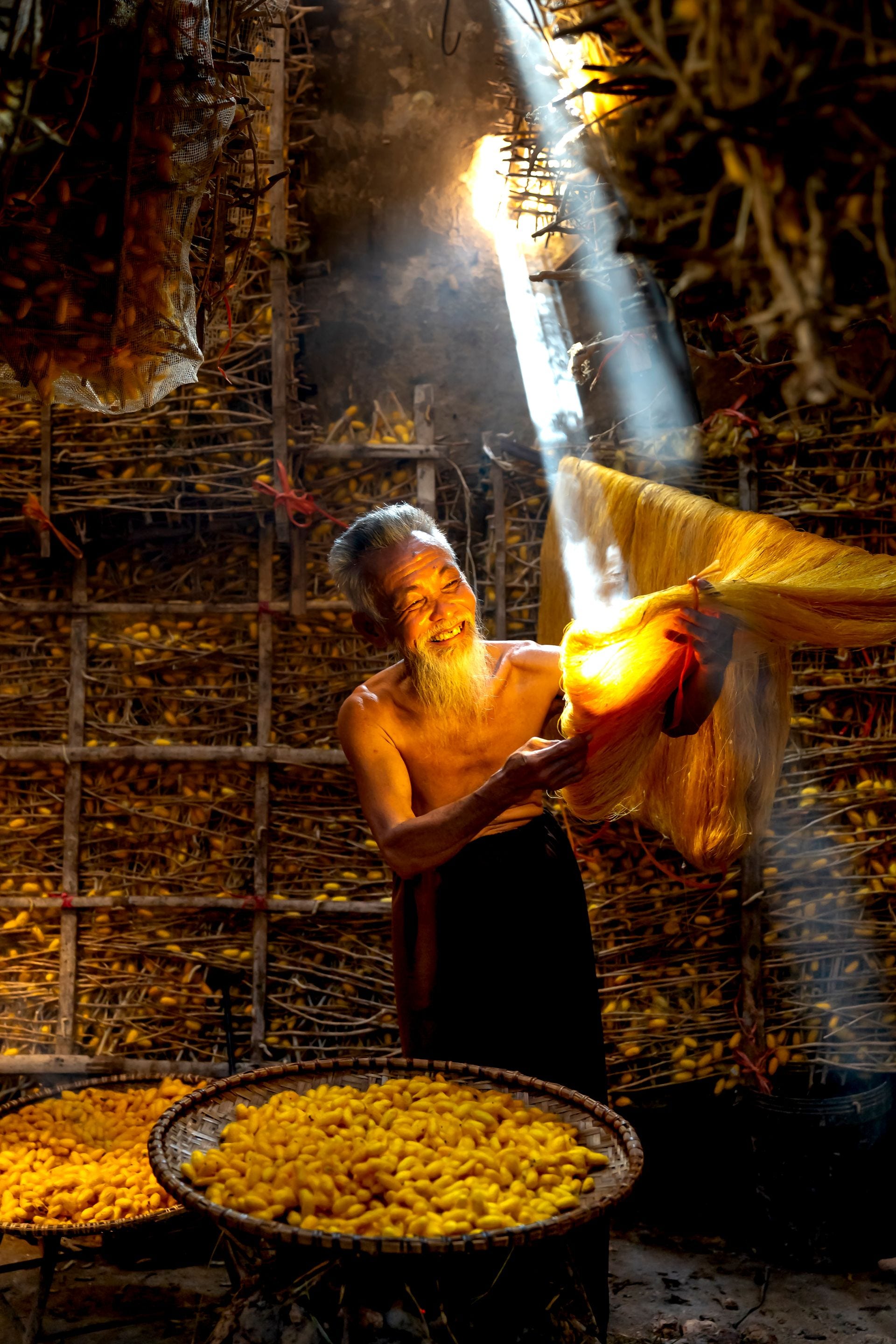
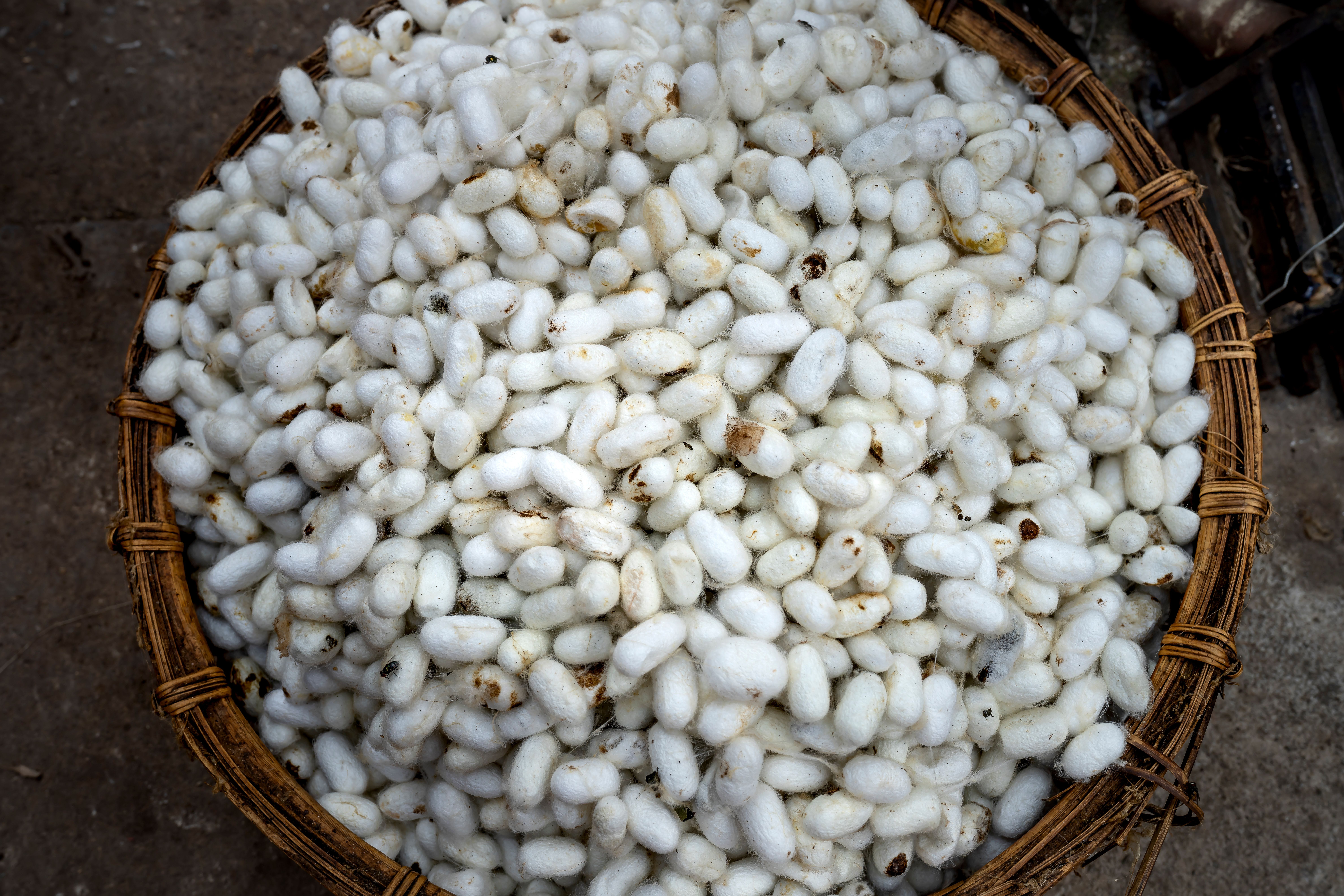
Spins a cocoon around itself using a protein rich liquid, essentially its own spit, which hardens when it meets the air.
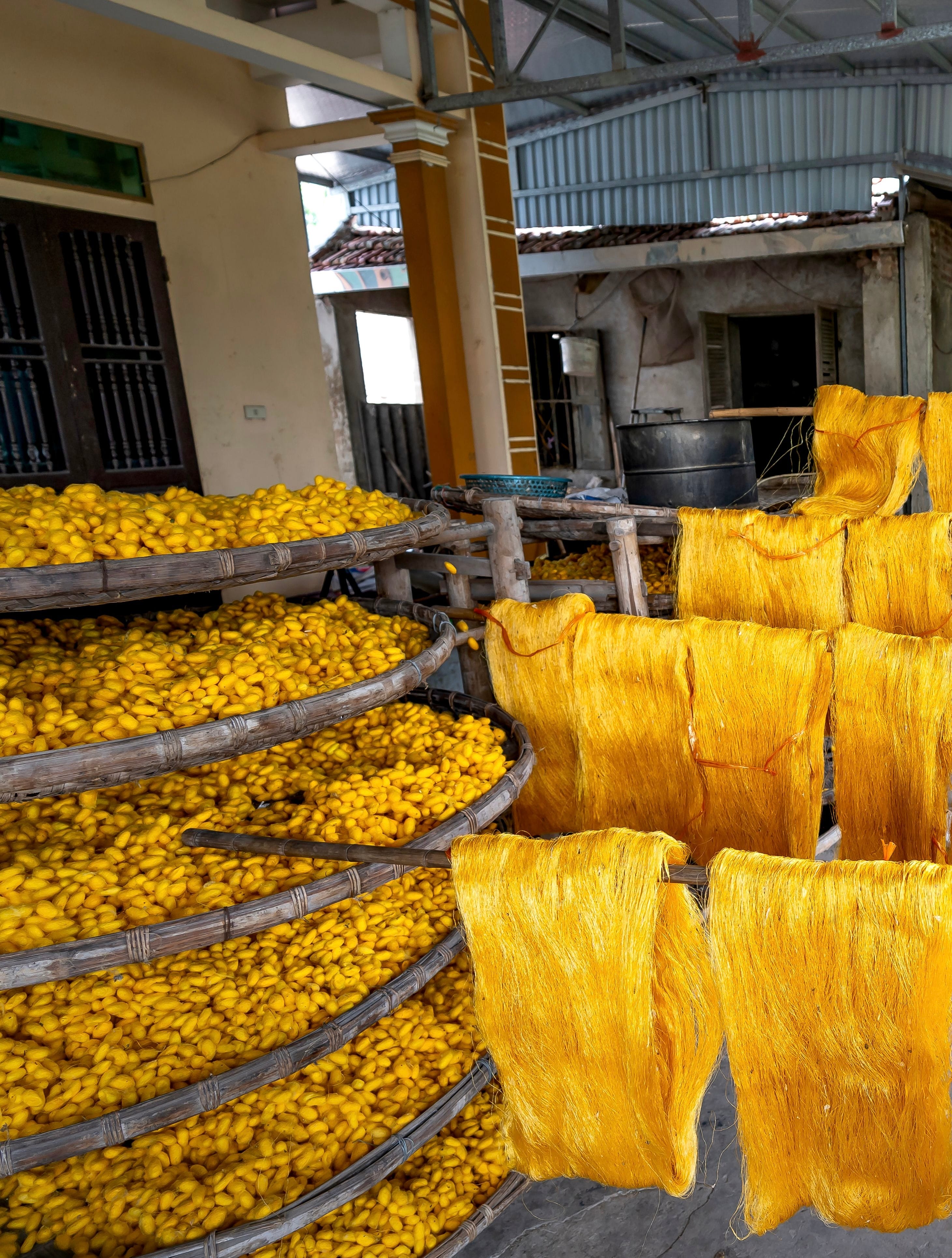
The cocoon is carefully collected and boiled or steamed to soften the threads.
The softened threads are gently unwound from the cocoon.
Several fine threads are combined to create a stronger silk thread.
This is then dyed, woven and transformed into a luxury fabric.
We call this - silk!
We then wrap ourselves in this fabric and just like a silkworm, we’re cocooned in a silk womb of safety and comfort.
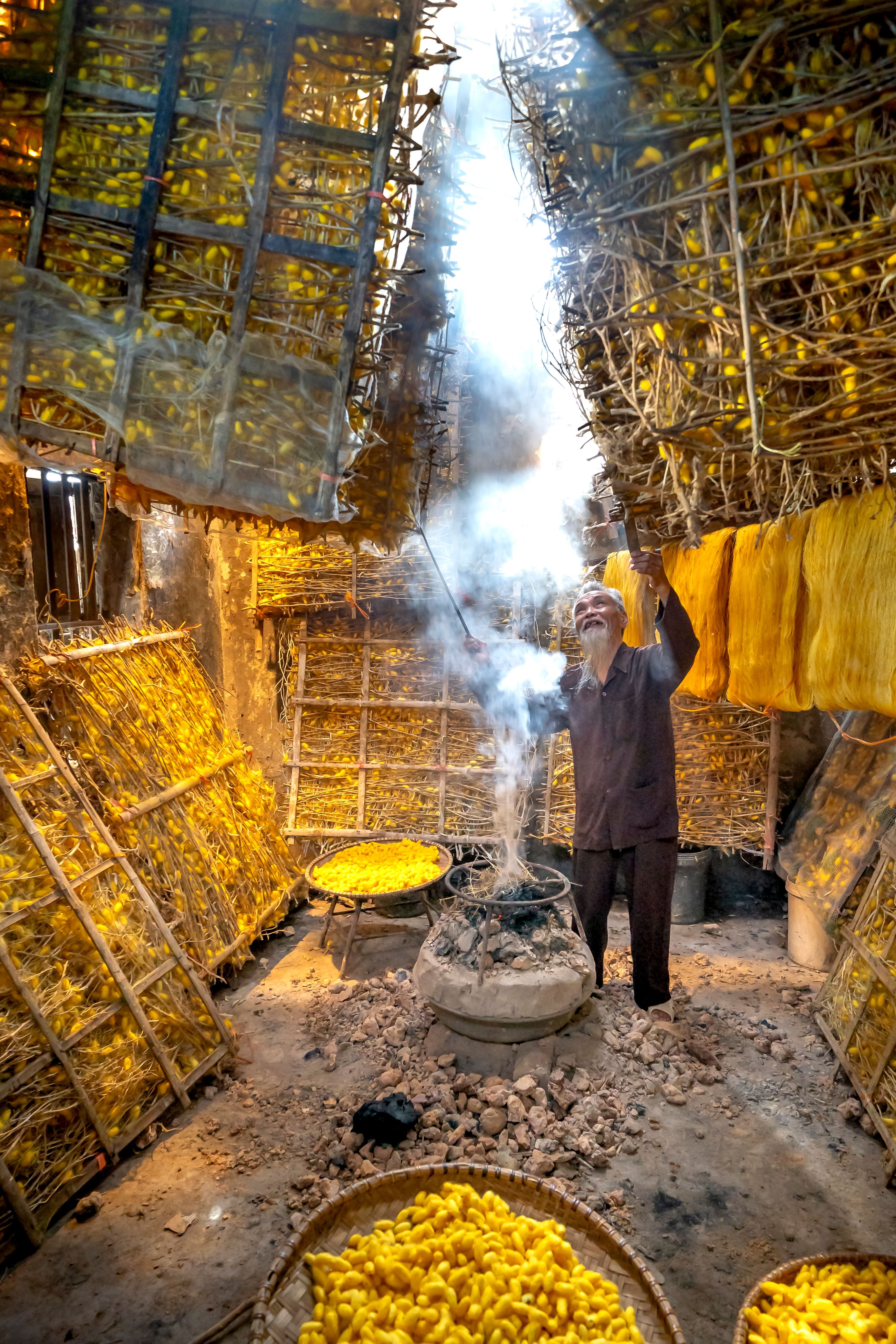
It’s fascinating and incredible how something created through heat, smoke and relentless labour ends up feeling so gentle and calming.
This is why it has earned its place in the luxury material category, a term well deserved.
Want a scientific explanation? I am definitely not qualified to tell you → this study is.
The Sacred Temple
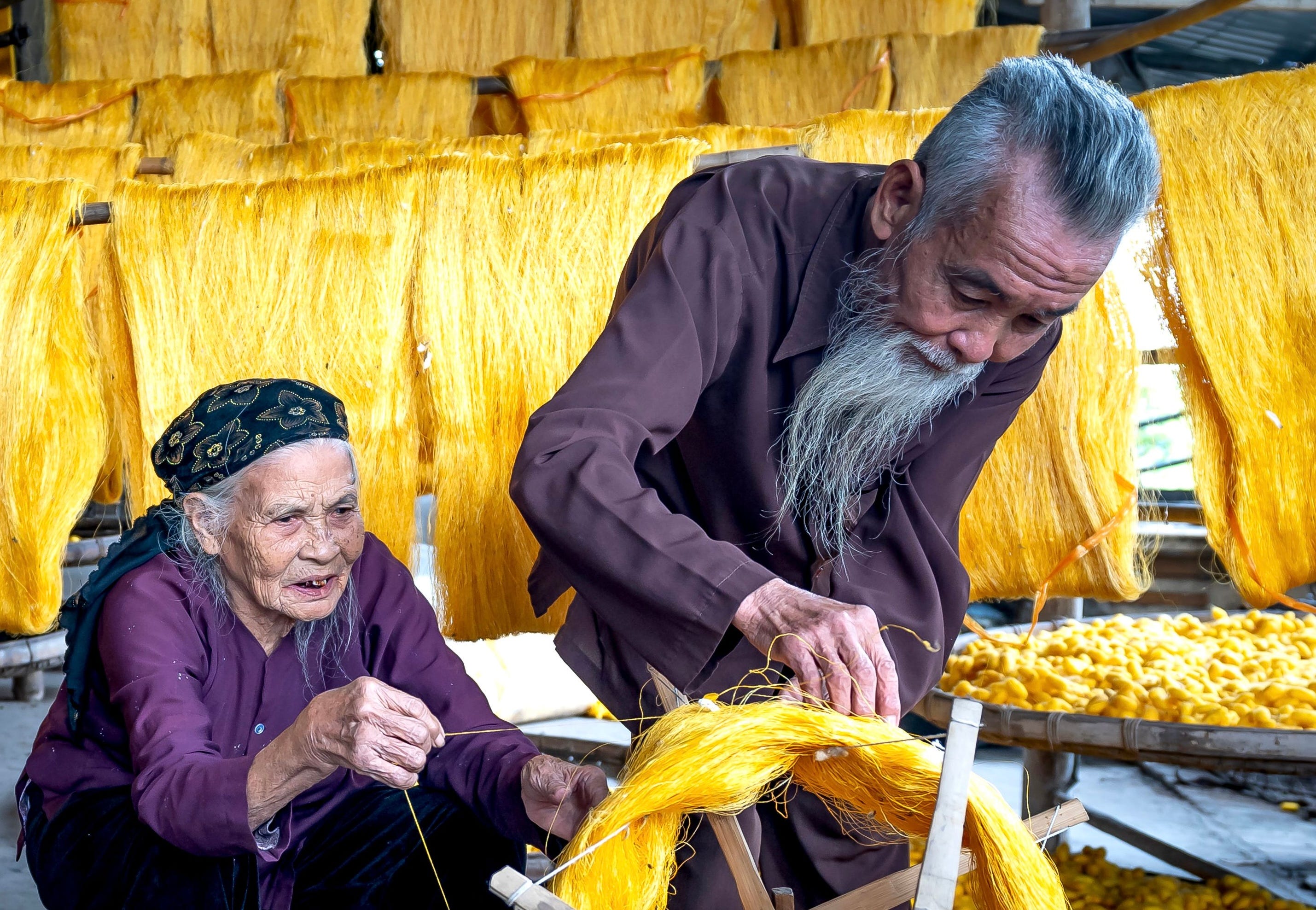
It’s not really a factory, more like a temple holding generations of knowledge being repeated over and over again. And the beauty of the process is that so much of it still comes directly from nature.
Even the intense yellow colour of the cocoons is natural. In order to change the colour of the threads, ingredients like: turmeric, onion skins and almond leaves are often used.
To honour life’s cycle, the silkworm pupae and mature moths that don’t continue the breeding cycle are harvested and eaten as traditional protein delicacies or dried for traditional medicine.
The Hands Behind It
Do they know that fibres spun in their village might appear on a runway in Paris?
Most of us only ever meet the finished product. We rarely think about the people behind it, the generations of knowledge, the connection to nature and the patience needed to create such luxury.
I do wonder whether the people creating silk realise just how far their work travels and how it makes people feel.
OSI Archive: Silk
There are multiple types of silks around the world. Dyed and created into something unique depending on the region:
📍 Hong Ly Village, Vietnam: Deep within the Vũ Thư district of Thai Binh Province. Smoke, golden cocoons, and generational masters.
📍 Assam, Northeast India: Produces ‘ethical’ Ahmisa silk (Eri and Muga.)
📍 Sakon Nakhon, Thailand: Renowned for the Queen Sirikit Sericulture Centre, where weavers use mud soaking and indigo dyeing techniques. → (coming to the OSI Archive soon)
I’m mindful of sharing exact links to local workshops as I've always felt there’s a fine line when it comes to preserving such crafts.
A Few Facts:
• Parachutes → before nylon was created, because of its strength and lightness, silk was used in military parachutes.
• Stitches → Silk proteins are highly compatible with human tissue and are used today in surgical sutures and other treatments.
• Ethical Silk → Ahimsa silk allow silkworms to complete their life cycle before the fibres are harvested.
Q. Have you ever stopped to think about where the things you wear actually come from?
I would love to know.
Interested in the process? Watch it here 👇
Be Part of the Community
“Without India, Would Jeans Exist?”
What should be Pinned 📍 in the OSI Next?
If there’s a person, place, or thing you think belongs → let me know.
A trusted curation of fascinating stories and creations from around the world. Join me in mapping out the things that make you stop and think,
‘wait…tell me more.’