


This is another entry into the Private Atlas. 📍
The Private Atlas is gradually becoming a collection of remote landscapes, heritage crafts and communities whose knowledge has survived generations. Most of my entries so far begin with a landscape. This one begins with a broken pot.
I wasn’t sure this one belonged. What does a shattered ceramic pot have in common with hunter gatherers in the Kalahari or knitters on a remote North Atlantic island? The more I thought about it, the more I realised that it made sense. The things I find myself pinning in the Private Atlas are not really about the places themselves, but the different ways of seeing the world. Kintsugi felt like another one of those.
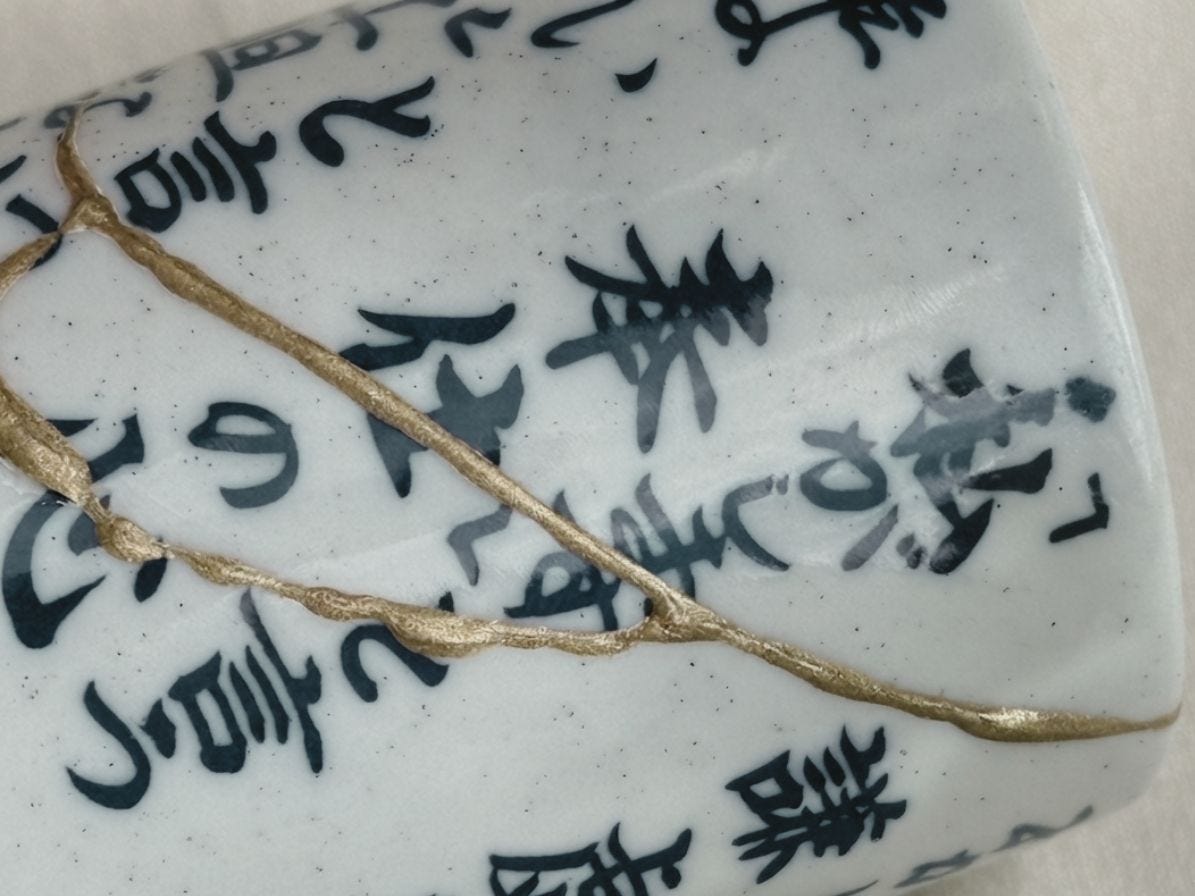
When the pot slipped and shattered across the floor, my reaction was frustration, followed by something else. I didn’t want to throw it away. It was a pot I cherished. I’d picked it up on my travels and every time I looked at it, it reminded me of how lucky I was to have visited that place and to have brought a small piece of it back with me. I scoured the internet for ways to repair it. That is when I came across kintsugi.
Translated as “golden joinery”, kintsugi is a Japanese repair technique that immediately captured my attention. Rather than hiding the damage, it celebrates it. The broken pieces are repaired using urushi lacquer, a natural tree sap and finished with usually a gold but sometimes silver, platinum or red powder. The cracks remain visible, making it almost look like veins running through the object. Instead of hiding the repairs, they become part of it, giving the object a different kind of beauty a kind that holds a story.
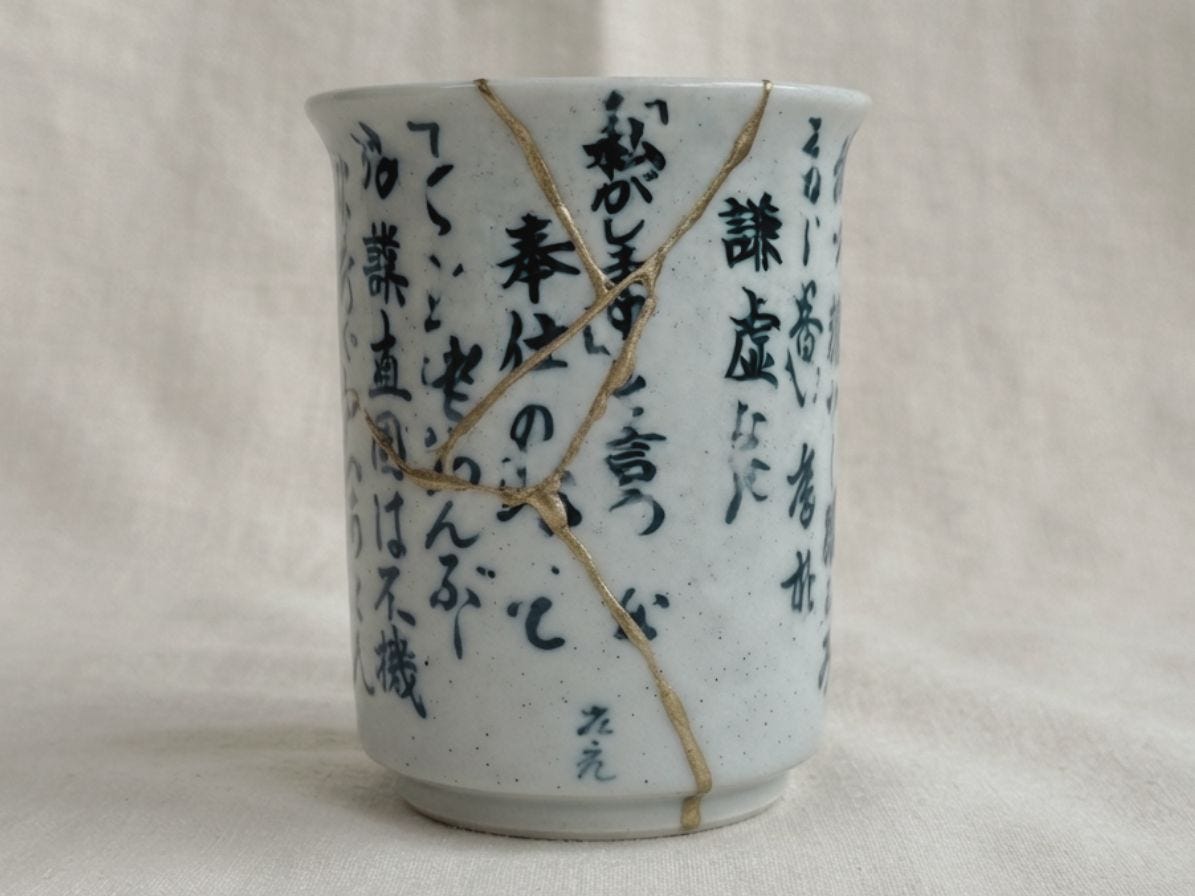
The story goes that Kintsugi was born centuries ago, when a Japanese shogun sent his favourite broken tea bowl away for repair. It returned held together with ugly metal staples. Dissatisfied with this look, he asked his craftsmen to find a better solution. What they created was more than a repair technique.
What I find most interesting about kintsugi is not the gold. It’s the decision to hold onto something even if it cannot be repaired to how it was before. The cracks remain visible and you can still see where it is broken, yet somehow that is exactly the point. It makes the object more interesting, more beautiful, more alive. We are encouraged to replace things that ‘no longer work’ things that are ‘broken’. Phones are upgraded, clothes are discarded and furniture, thrown away. When something breaks we automatically want to replace it with something newer, something ‘better’.
Kintsugi provides a different answer.
I’ve started experimenting with it myself, although my attempts are deffinately not as neat. I think that there is something deeply satisfying about repairing an object rather than throwing it away. It feels like an act of care. To me, this is special, this something beautiful. It’s not about the object being ‘perfect’. It’s about caring enough to keep it.
That is why kintsugi belongs in the Private Atlas.
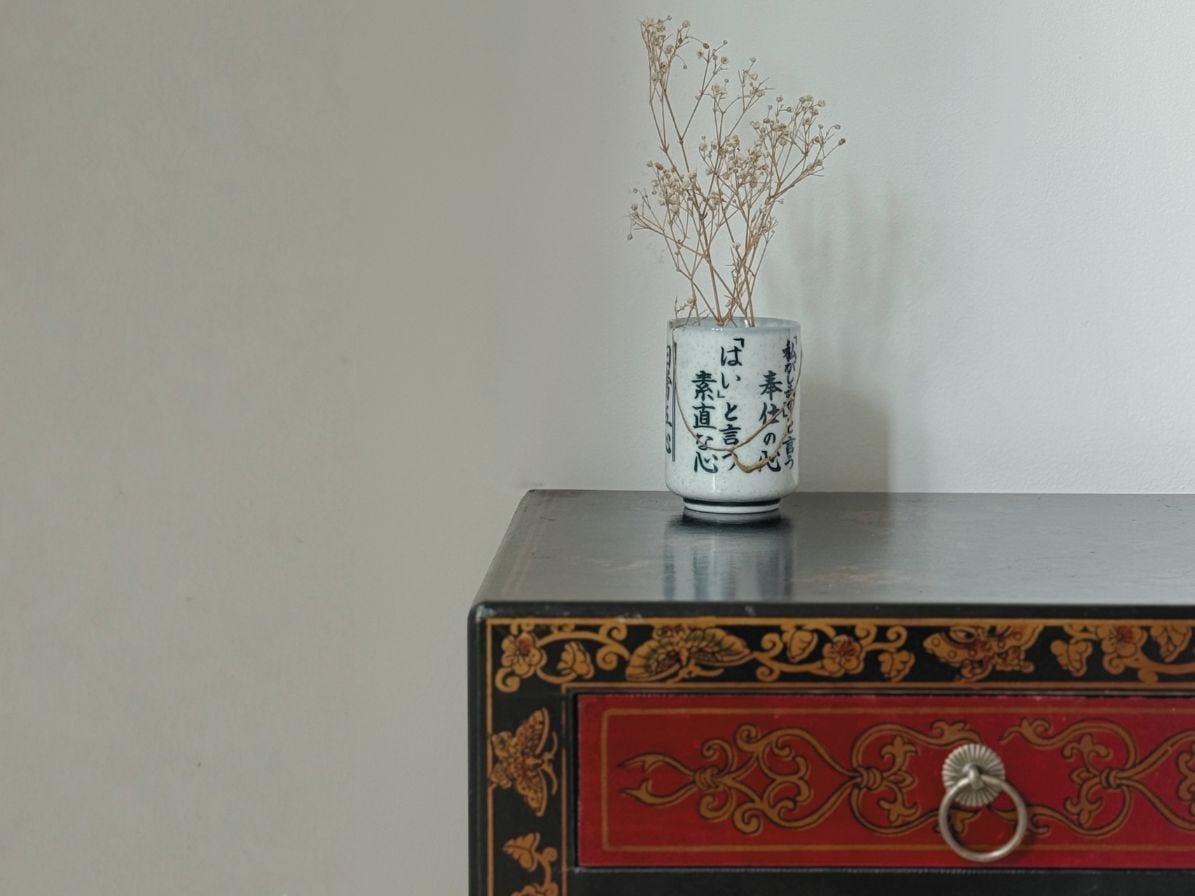
Most of the things I document here have survived something. The traditions of the San have survived thousands of years. Fair Isle knitting has survived despite the isolation. Kintsugi feels no different. It is another example of something old continuing to exist in a world that often seems more interested in replacing things than preserving them.
This is the thought I keep returning to after learning about kintsugi. Why are we so quick to throw things away? Not just objects, but skills, traditions and ways of seeing the world. I find myself drawn towards places, crafts and communities that somehow have not dissapeared. Perhaps that is what drew me to kintsugi in the first place. Not the gold or the repair itself, but the simple idea that something can be broken and still be worth keeping.
What is one lesson from a traditional craft or culture that has changed the way you see the modern world?
This entry is another pin on the map.
The Private Atlas is becoming a catalogue of places, traditions and objects that offer a different way of seeing the world.
📍 A Society Without Status: Life With the San People of the Kalahari
📍 Fair Isle: The Living Craft Tradition of the Shetland Islands