


This is another entry into the Private Atlas.
So far, these entries have been an exploration of the curiosities that keep pulling me back. Over time, this archive will become a collection of remote places, traditions that haven’t disappeared, heritage crafts and the stories of people surrounding them.
This entry begins with a jumper. Or, a ‘gansey’, to some.
Fair Isle is one of around a hundred islands that make up the Shetland archipelago, a remote group of islands at the northern edge of the United Kingdom. Life here revolves around the land, sea and weather. The weather is rarely gentle. The wind does not blow - it howls. Or as the locals say, it’s ‘gowlin’. The rain does not drizzle, it arrives side ways from the North Sea. Even in summer, when the skies are bright and clear, there remains a crisp freshness to the air that reminds you just how far north you really are.
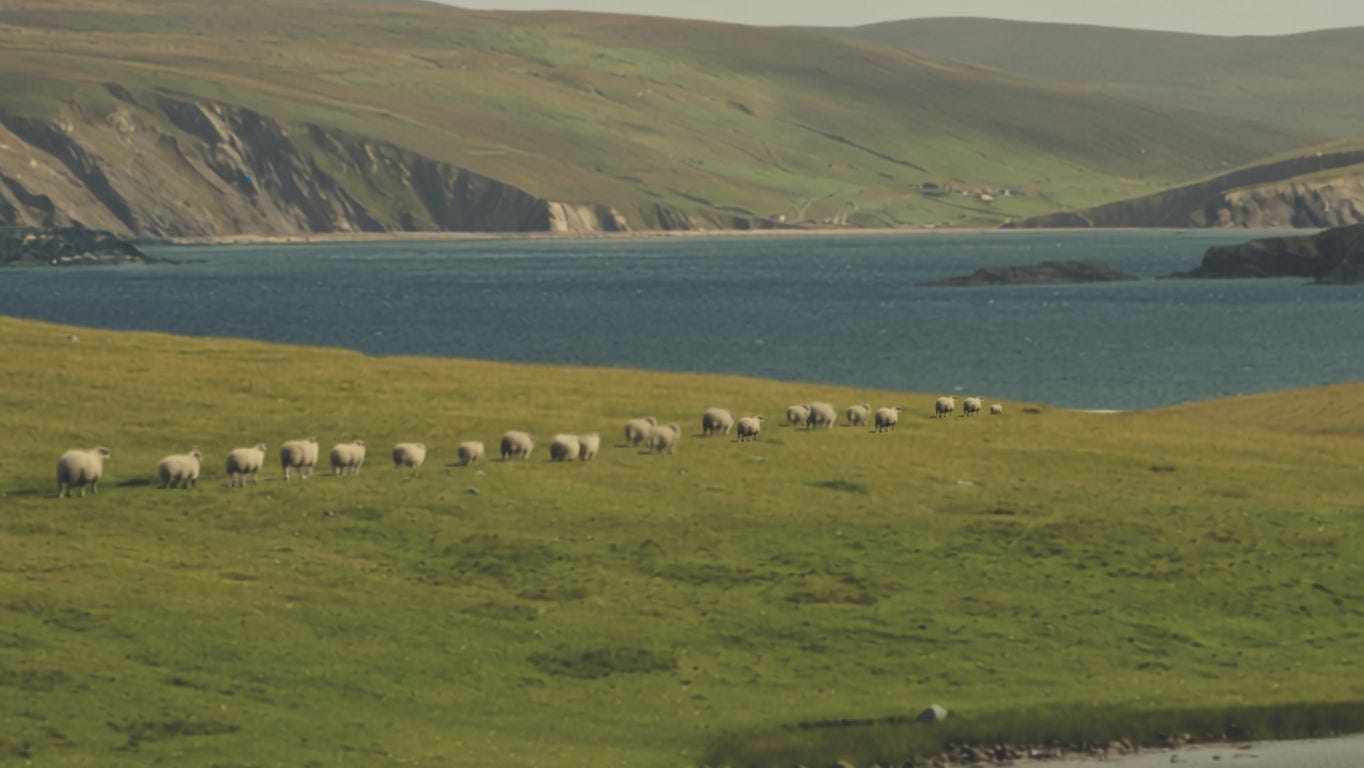
In a place shaped by isolation and harsh weather, everything has to earn its place and clothing has a job to do. It’s a necessity. This is why the Fair Isle jumper was born.
Before it appeared on runways and fashion magazines, the ‘gansey’ was a survival tool. Designed by the people living in one of the harshest environments in Britain. It was created to protect against the cold winds, rain and long days spent outdoors.
The story starts with the sheep. The Shetland sheep have adapted to the elements on the islands, the wool they produce feels like part of the land, it is difficult to imagine it coming from anywhere else. It has spent centuries adapting to the same winds and rain that shaped life so far north. Once it has been sheared and spun, it becomes literally like a shield from the harsh conditions. The fibers trap tiny pockets of air, helping to regulate temperature and protect against the elements. One of its most amazing qualities is the way raindrops gather on the surface like tiny glass beads before eventually, just rolling away. I personally think there is something truly magical about this.
Turn a Fair Isle jumper inside out and you’ll see the loose strands running across the back of the knitting. Known as floats, they form a hidden layer beneath the pattern. I’ve always liked that. The most important part of the garment is the part nobody sees.
But the wool isn’t really the point and neither is the pattern. Like the floats hidden beneath the knitting, that’s when it becomes more than a jumper.
Fair Isle is known for patterns inspired by waves, ram’s horns and the colours of the landscape. They were not designed soley for beauty, they came from what people saw around them. It was a way for the islanders to knit their surroundings into their clothing. The sea, the weather and the land all found their way into the knitting.
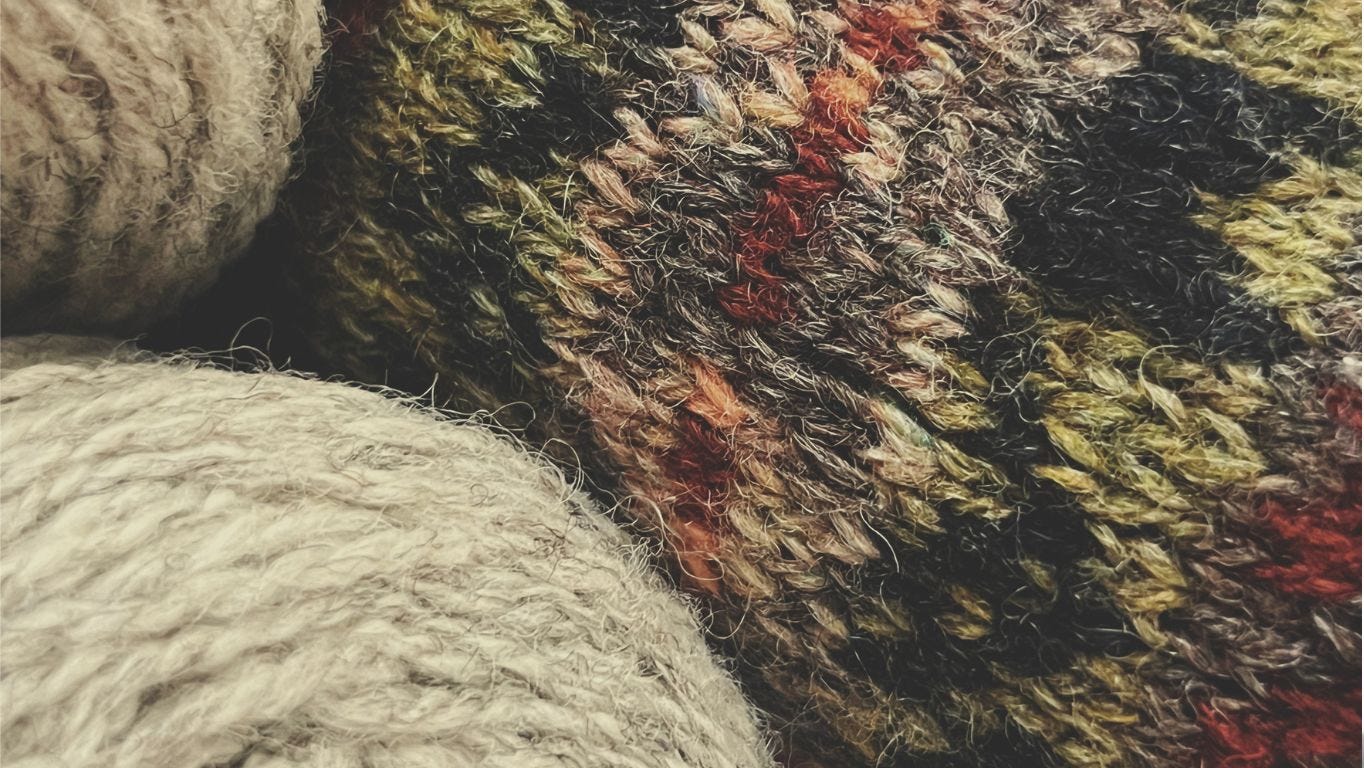
The thing I find most interesting, is how closely Fair Isle remains tied to the islands that created it. Although it found its way into fashion, Fair Isle has never fully detached itself from the landscape. The weather continues to shape life here. The wool still comes from sheep adapted to the islands. You can still see traces of the sea and the landscape in the patterns. It never lost the conditions that created it.
That is why it belongs in the Private Atlas. To remember traditions like this. Objects that couldnt have been made anywhere else. It’s not just a jumper. It is a garment shaped by a place where the wind howls, rain arrives sideways and life is shaped by the sea.
The pattern isnt really the point. The island is.
I am documenting these places and crafts in my Private Atlas. Not as a travel guide or a checklist, but as a record of the things I don’t want to forget. The places, traditions and objects that reveal something about the people who made it.
If this resonates with you, consider subscribing. Each week, I’ll share another pin from the atlas: the heritage crafts, remote landscapes, and quiet traditions that remain rooted in their origins, waiting for those who take the time to notice.
I know it isn’t the point- but the pattern is one of my favourite knitware patterns!
Great article!
Writing about the wool and how it is fashioned for use in that place is such a great way to keep the knowledge of tradition living history.