


“The only way our tradition and way of life can survive is to live in the memory of the people who see us.” - Dawid Kruiper
Termite mounds, trees that look like they’ve survived an apocalypse. That’s what you’ll see whilst travelling through Namibia.
Until you meet the San, who share their knowledge of their land, and everything you thought you knew changes.
“Empty” said more about what I knew than what was actually there.
A landscapes of extreme diversity.
Namibia moves from vast barren lands, rugged rock formations, to the towering dunes of Namib, the oldest desert in the world.
Such a diverse landscape reveals the contrasts of intricate ecosystems and the deep culture the country holds.
Old diamond towns vanished once the diamonds were gone. A reminder that knowing one type of land doesn’t mean you automatically understand the entire landscape.
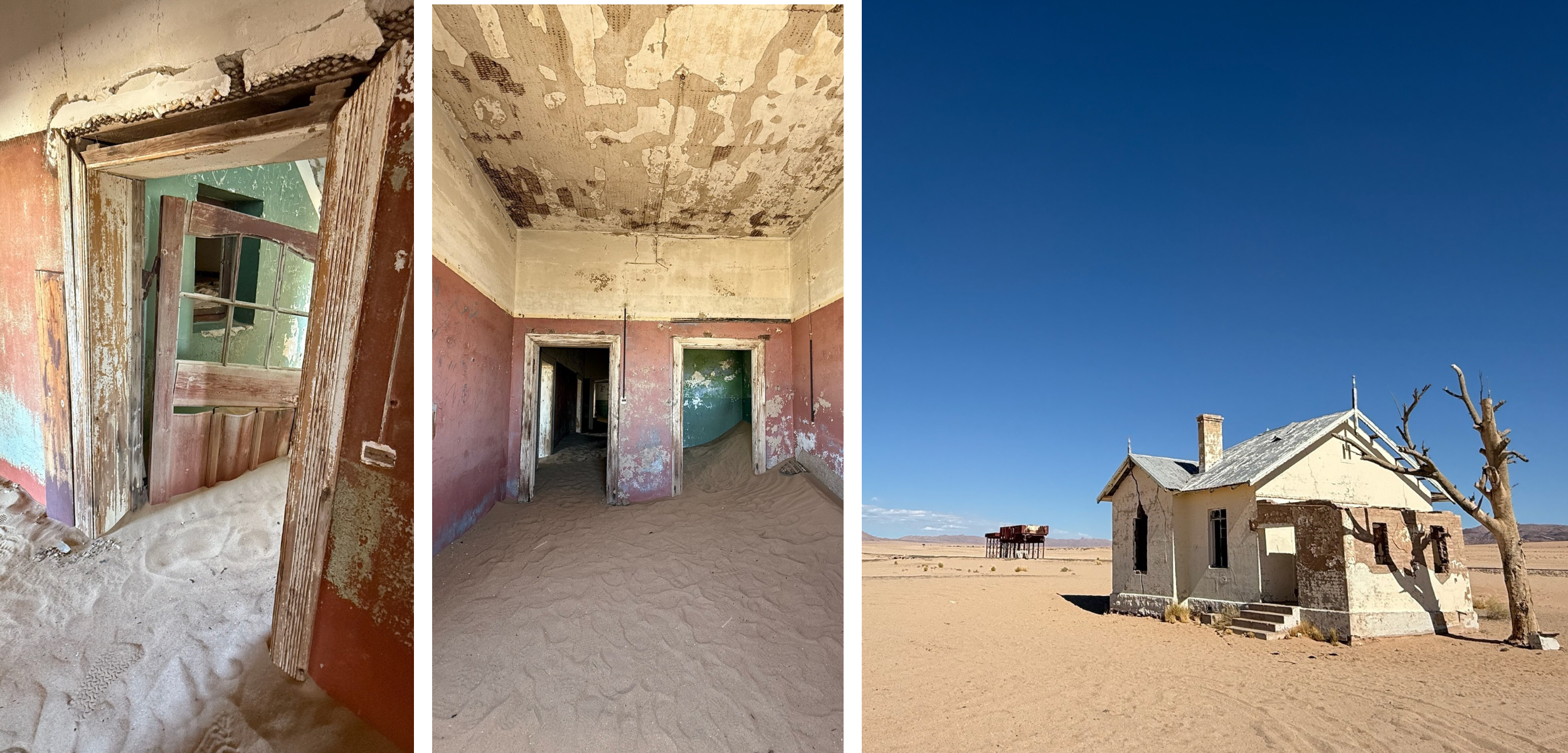
I thought knowing the landscape meant how to follow a map, knowing north from south. I was totally wrong.
Surviving in Namibia, means knowing how to read the land. Who better to learn from than one of the oldest cultures in the world?
The semi-nomadic people - The San - also know as, The True People, Ju/’hoansi, Bushmen, Khoe-San.
SERIES
NAMIBIA
Read | WHAT NOBODY TELLS YOU ABOUT NAMIBIA
Read | WHAT THE BUSH HIDES
Read| LET’S NOT TRAVEL TO FIND OURSELVES
Which came first, the ostrich or the egg?
Travelling the country, picking up bottles from local stores and petrol stations and piling them into the 4x4’s fridge - simple.
But imagine having to find water from the dry land around you.
Understanding where water can be found and then having to store it for later.
Drinking the recommended two litres a day doesn’t seem quite so easy anymore.
The San came up with an impressive way to store the water.
San are one of the world's oldest human cultures.
Ostriches are one of the world’s oldest bird species.
What does Namibia know that other countries don’t?
The landscape supplies the material, but knowledge turns it into an object.
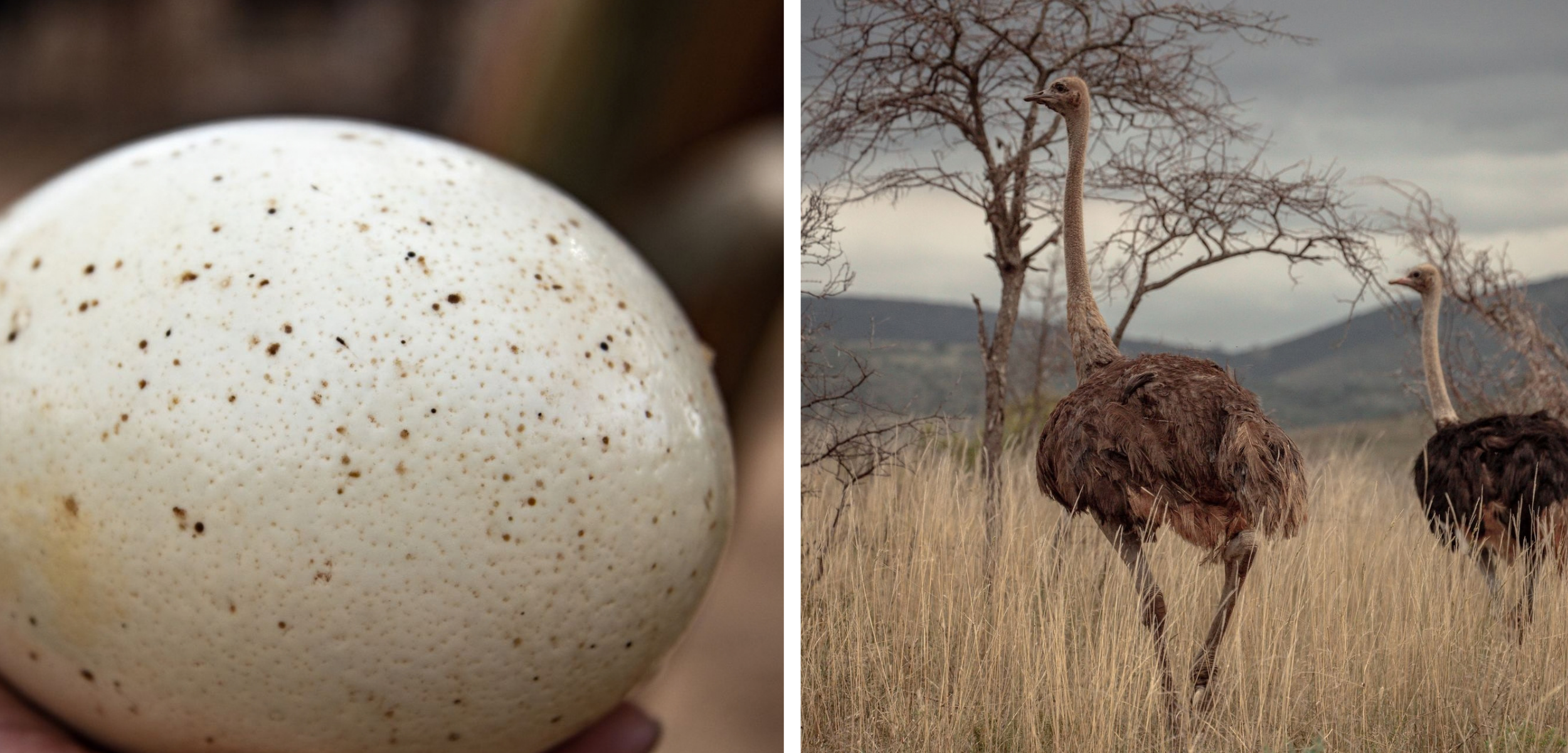
No taps or plastic bottles, just an egg - an ostrich egg!
An egg is no longer just protein, but a flask.
A small whole is pierced into the shell which is then filled with water, often using a natural straw to siphon water from the ground. When it’s time to live that nomadic life and move, the opening is sealed and the eggshell buried for later use.
In the desert, nothing goes to waste.
Once that shell breaks, the pieces can be shaped into beads, threaded onto plant fibres and made into jewellery.
Maybe this is why the San have survived.
Because much like Japan’s Kintsugi philosophy, they see beauty in what someone else might deem as broken.

We see the end product - the flask, the jewellery - but we don’t see the story.
The ostrich, the egg, the shell, the fibre and the people who create it.
Similar to silk. We admire the shirt hanging in a shop, yet we rarely think about the process; the cocoon, heat, fibre and labour behind it.

If looking at objects and understanding their story is your thing…
Check out → Namibia Craft Centre.
“Yes, the plant looks cool. What’s next?!”
My first reaction to a plant in Namibia’s desert.
I had no idea how “cool” it really was.
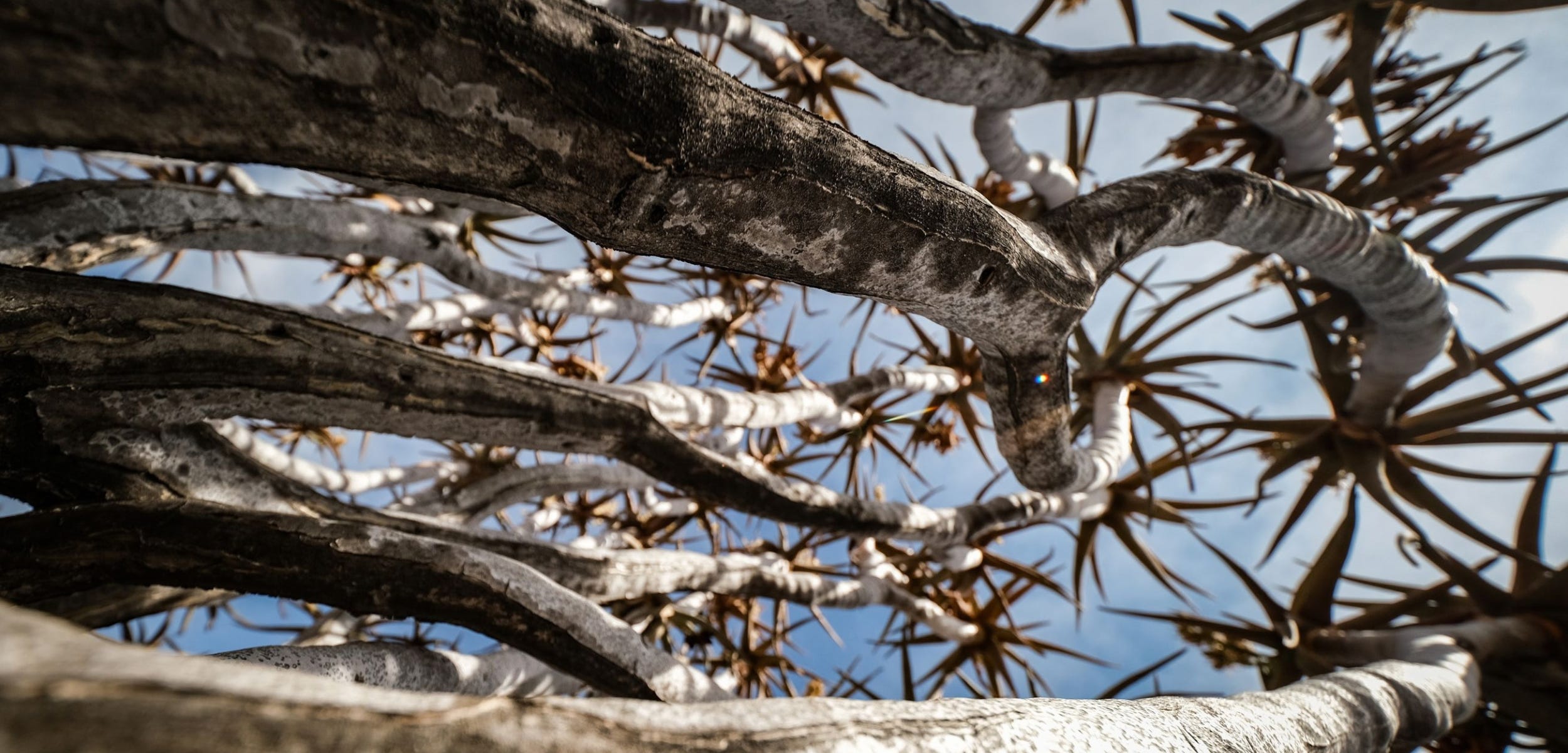
ln the Kalahari, plants are part of survival. The San are taught to recognise and differentiate, food, medicine and material.
Which parts to use? Leaf? Root? Bark?
How do you collect it?
How’s it prepared?
What survives when there’s a drought?
Which plants should NOT be used?
Devils claw - known for medicinal use. Have you ever thought about where it grows or how it is harvested? It’s native to Namibia, and whilst harvesting, the secondary roots are left in the ground, allowing the plant to continue growing.
Knowing a plant isn’t just about knowing what it does. You need to know how to preserve it, and that’s what the San are true masters of.
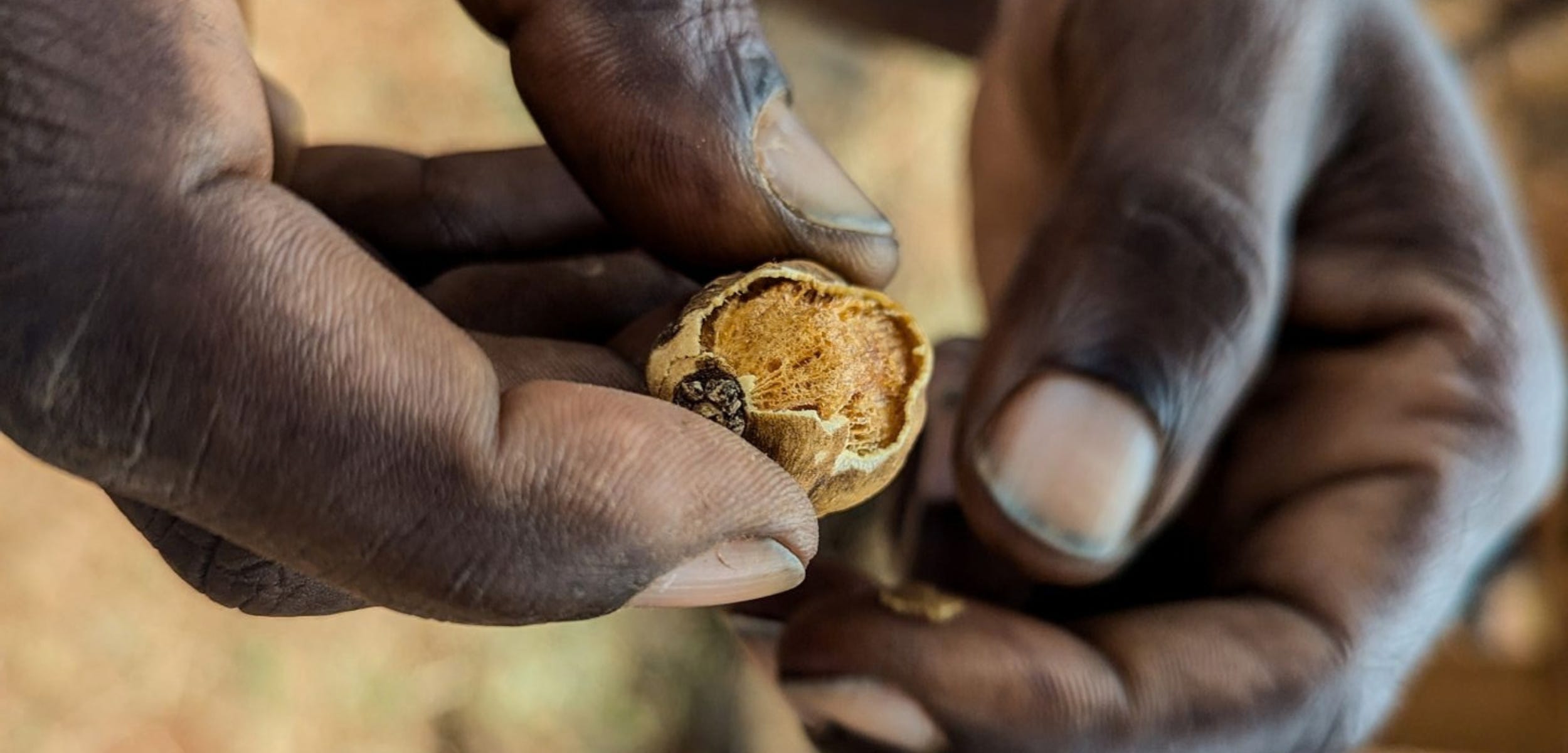
Marula - the fruit’s pips produce an oil used in cosmetic oils, serums and creams. Inc. cult favourites -The Ordinary and Drunk Elephant.
We generally tend not to think about the origins of most products we use.
And by the time a product reaches us, the plant and the person who knew how to handle it have usually disappeared from the story.
Travelling Namibia - A cultural experience, where the richness of the land and its people hold so many stories.
Educated by the bush
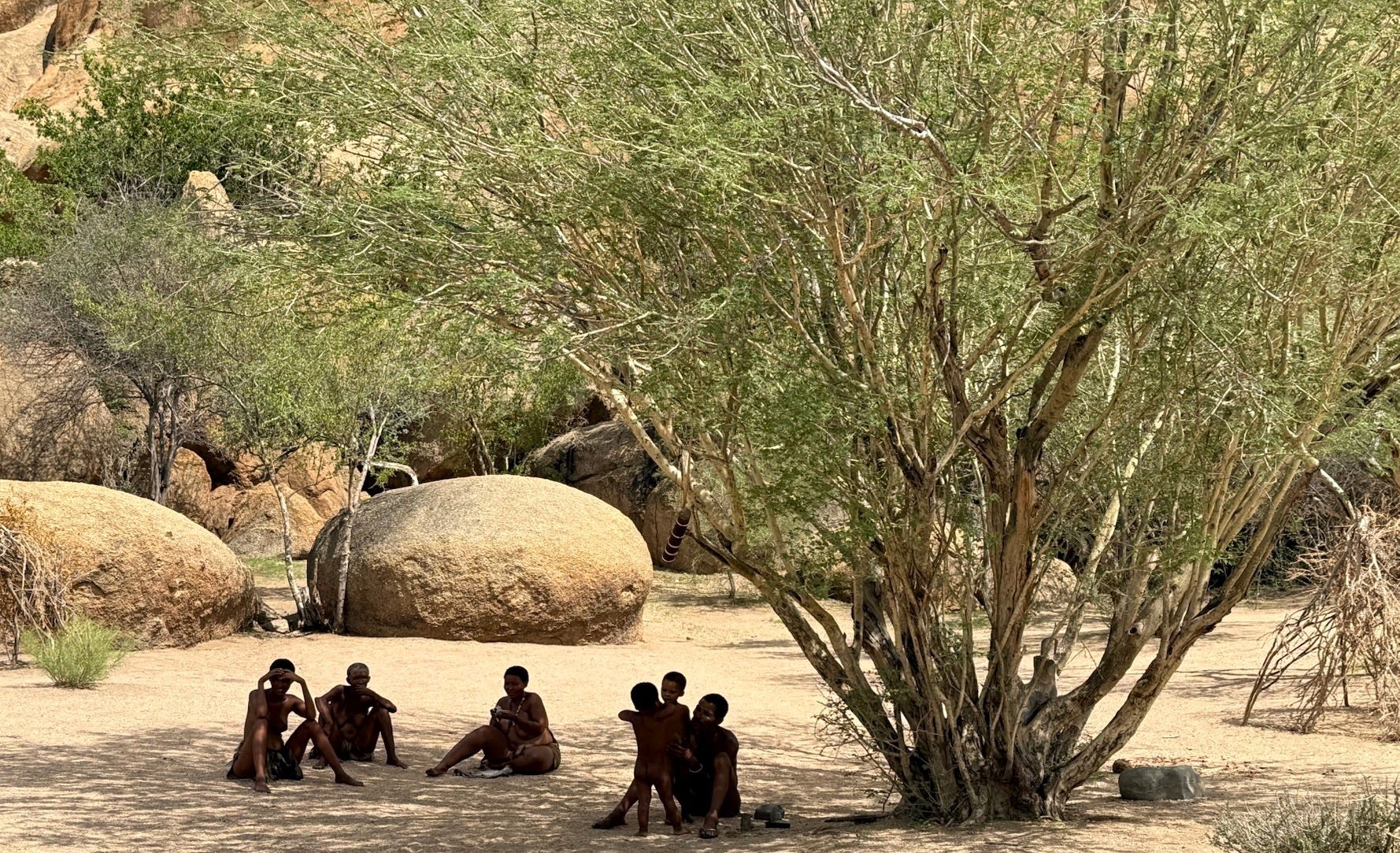
In order to survive, people learn what to dig up, where water might be hiding or which plant could be useful.
The children grow up watching the adults around them. Someone points something out, somebody else copies, again and again until eventually the process feels obvious.
Imagine knowing a landscape so well that:
You know what can feed you.
What might heal you.
What can become something useful so such.
Where to look for water when everything around you looks dry.
Then, imagine passing all of that on without a book, a map or an instruction manual.
And once someone starts showing you that process, you realise what’s actually there, and it’s no longer looks empty.
“Empty”
What we call a place when we don’t understand what we’re looking at.
Bushmarket of the Kalahari
My comparison of bush and supermarket in ‘A Society Without Status‘ seems increasingly accurate.
Imagine:
Walking into a supermarket where nothing has a label.
You don’t know what’s food or medicine, useful or dangerous.
So, you wander around feeling completely useless.
Everything’s there, you just have no idea what things are.
This was me in the bush. The nature spoke a language I did not understand.
What should be in the Archive next?
If there’s a place, people or craft you think belong here - Let me know.
A trusted curation of fascinating stories from around the world. Join me in my travels, mapping out people, places and crafts that make you stop and think.
‘Wait…tell me more.’
Bye for now.

Nature brings a surprising amount of things. It took centuries for most things to be established. The knowledge crafted from civilisations is sometimes wasted on us in the modern world.
there's tons of hidden knowledge unbeknownst to scientists & if only they were humble & could lose their ignorance, & visit the nomads, they'd learn a lot! every layman can learn tons as well by reading about them and learning about resourcefulness and appreciation for nature