


So far, my entries have been an exploration of the curiosities that keep pulling me back. Over time, this archive will become a collection of remote places, traditions that haven’t disappeared, heritage crafts and the stories of places that make you think and feel.
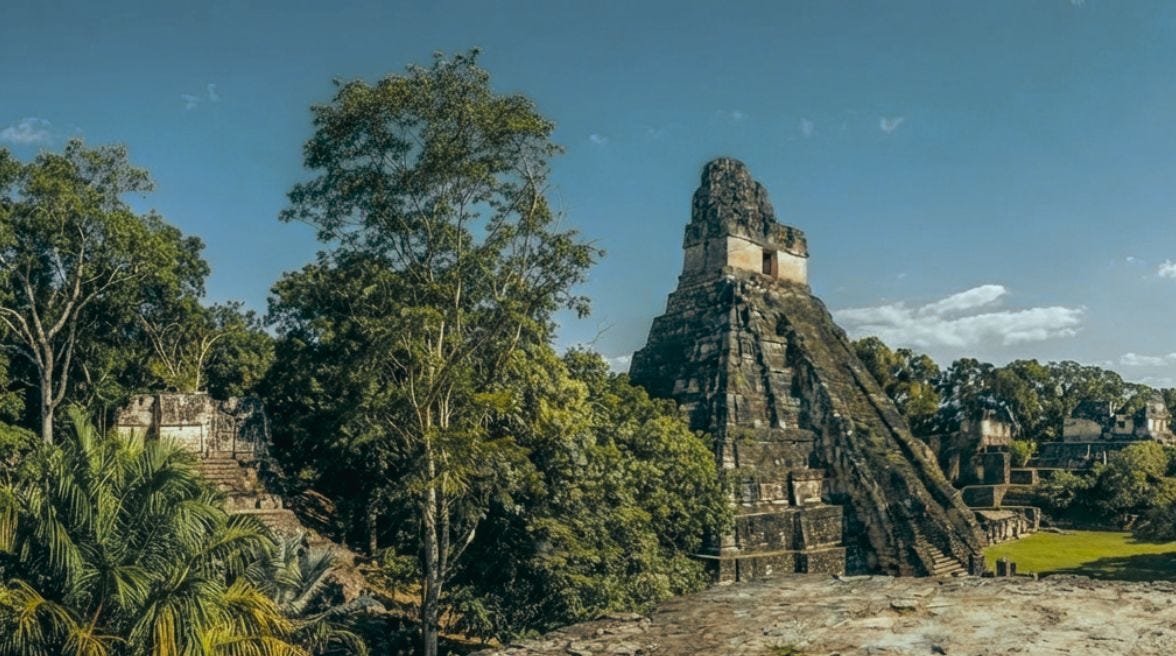
The Mayan ruins of Tikal are one of those places.
The more I think about what I am building with In the OSI, the more I realise this archive isn’t about hunting for places nobody has heard of. It is about collecting places that stay with you long after you’ve left them. Places that quietly rearrange how you think about the world.
Hidden deep within the dense, humid rainforests of Guatemala, was unlike anywhere I had ever experienced. Not because it is undiscovered or difficult to find, but because it forces you to think and confront something we spend most of our lives avoiding - time.
This is not a history lesson. There are people far more qualified to explain the rise and fall of the Maya. My interest is vast, but I am still learning. What fascinates me is the feeling of standing in a place that makes modern life, and oneself, feel oddly insignificant.
I was fascinated by the Maya, long before I arrived. The more I learned about them, the more intrigued I became. Here once stood a civilisation capable of building extraordinary cities. They were sophisticated mathematicians and studied the stars with such precision. Yet despite decades of research there is still so much mystery.
That mystery follows you through Tikal. As I wandered between the huge limestone blocks and climbed staircases that are centuries old, I found myself thinking about the same question over and over again. Why did an entire civilisation abandon its cities after working so hard at building them?
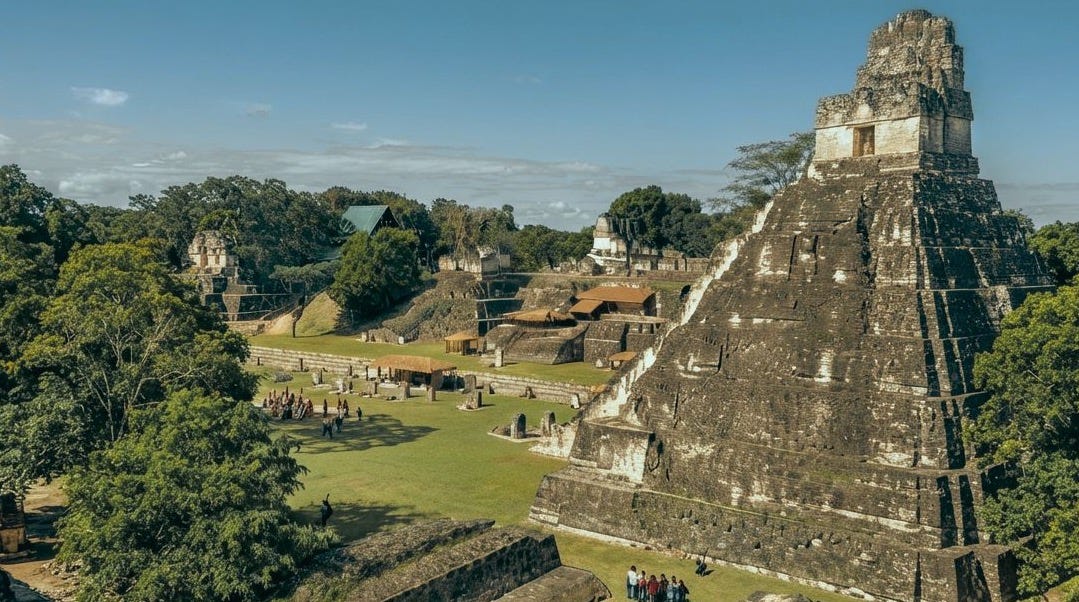
To me, it isn’t just that Tikal is an unknown place that fascinates me, it’s that we still don’t really know as much as we would like about the people who used to call this their home.
The Maya are often said not to have used the wheel for transport. Yet archaeologists have discovered tiny wheels attached to children’s clay toys. They understood the concept of the wheel so why did they choose a different path?
Standing in the middle of the jungle, surrounded by roots, mud and dense vegetation, it made me think about how different they saw the world around them.
The way they looked at the stars. Their understanding of astronomy was astonishing. Looking up at the temples rising above the canopy, I couldn’t help wondering why so many ancient cultures, separated by vast oceans and thousands of miles, all built towards the skies. What did they know that we don’t?
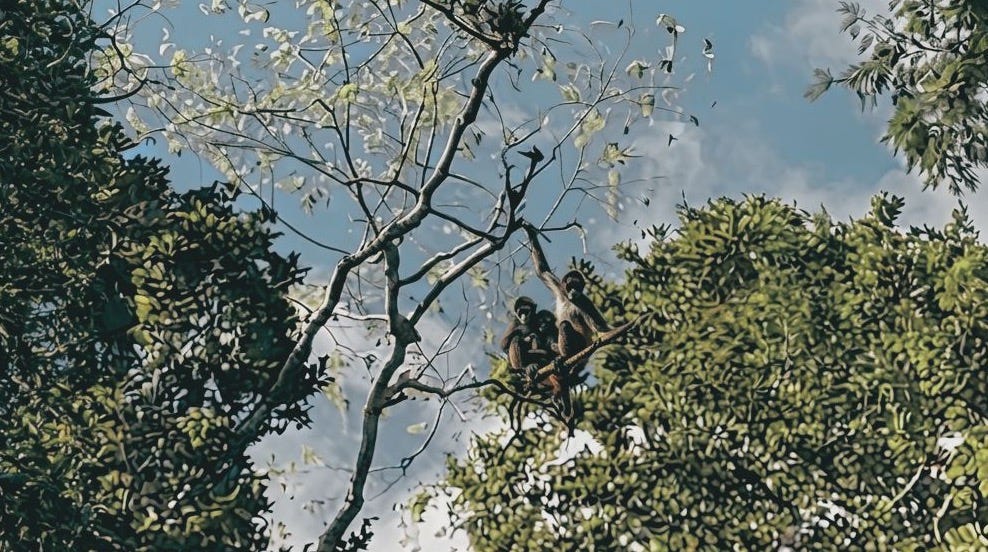
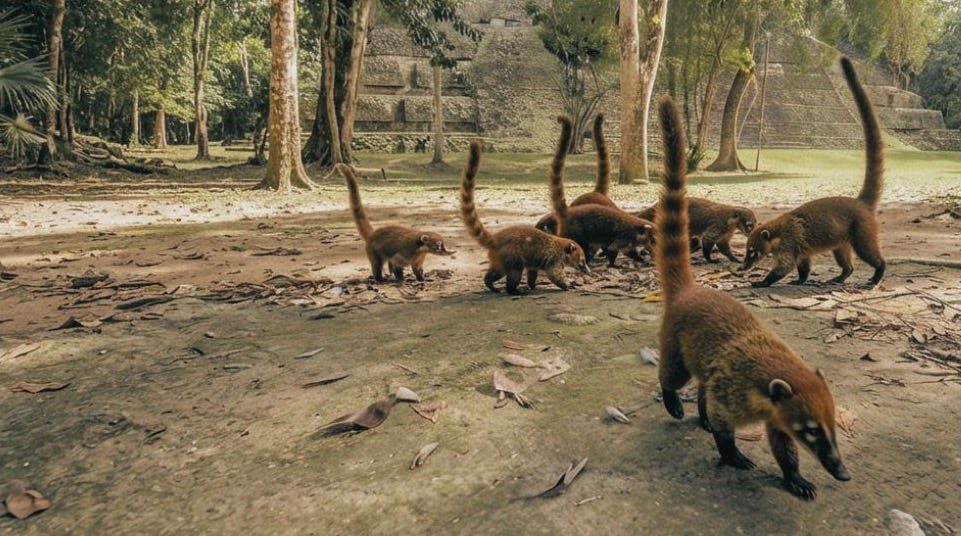
The deeper I walked into Tikal, the more I found myself paying attention to the jungle rather than the stones. The lost city doesn’t feel abandoned. It feels occupied by bands of coatis rummaging for fruits, monkeys roaring from high in the treetops, swinging between branches and the bright flashes of colour appearing as toucans glide through the canopies. The animals treat these ruins not as a historical site, but as their home.
They were here long before tourists arrived. They carry on entirely indifferent to the stories we attach to this place. That was perhaps the most powerful part of visiting Tikal. The jungle doesn’t feel like it destroyed the Mayan city, but that it outlasted it.
The trees massive roots wrap themselves around the huge stones, emerging from structures that once represented the most incredible civilisation. The forest continues to survive, growing steadily, season after season, century after century.
Standing there, it becomes difficult not to think about the modern world. We spend our lives chasing something, trying to grow, trying to progress, behaving as though permanence guarantees us something, perhaps eternal. Yet Tikal sits diligently within the rainforest, a reminder that even the most impressive civilisations are temporary.
A thousand years feels like an unimaginable length of time when viewed through the lens of a human life. Yet, to the jungle, it seems to mean so little. And perhaps that is why I cannot stop thinking about the Mayan ruins of Tikal. Not because they answered my questions, but because they left me with more of them. Not because I left understanding any more about the Maya. Far from it.
What stayed with me was the feeling of standing somewhere that challenged my sense of scale. A place that made life feel irrelevant, time feel different and nature feel far more alive than I could have imagined. I learnt that places don’t need to be fully understood to change you. They remind you that there is still so much of the world that we can not explain. And if you’re curious, like me, surely that is a good enough reason to keep exploring.
I am documenting these places in my Private Atlas. Not as a guidebook or a checklist of must see destinations, but as a collection of reminders that there are still corners of the world that reward curiosity, patience and a willingness to venture beyond the obvious.
If, like me, you’re curious or this resonates with you, consider subscribing. Each week, I’ll share another pin from the atlas: remote landscapes, hidden hotels, heritage crafts, cultural traditions and places that continue to exist quietly.


Love the line: I learned that places don’t need to be fully understood to change you.